
Your Garage Door Springs Are Working Harder Than You Think
Every time you open and close your garage door, the springs are doing the heavy lifting — literally. A standard residential garage door weighs between 130 and 350 pounds, and the springs are responsible for counterbalancing all of that weight. Most homeowners in Gulf Breeze use their garage door multiple times a day without ever thinking about the springs, but these hardworking components have a limited lifespan.
Torsion springs, the most common type used in modern garage doors, are typically rated for about 10,000 cycles. One cycle equals one full open-and-close. If your household opens the garage door four times a day, that's roughly seven years of use before the springs reach the end of their expected life. And here along the Gulf Coast, humidity and salt air can accelerate wear even further.
The good news is that failing springs almost always give warning signs before they break completely. Knowing what to look for can save you from a sudden failure, a stuck car, or even a dangerous situation. Here are five signs it's time to call a professional for spring replacement.
1. Your Garage Door Feels Heavier Than Usual
One of the earliest and most reliable signs of worn springs is a door that feels noticeably heavier when you try to lift it manually. You can test this by pulling the emergency release cord (the red handle hanging from the opener rail) and carefully lifting the door by hand.
A properly balanced garage door with healthy springs should lift smoothly and stay open about three to four feet off the ground without you holding it. If the door feels like it weighs a ton, slides back down on its own, or requires serious effort to raise, your springs are losing tension and need attention.
Important safety note: If the door feels extremely heavy or won't budge, do not force it. A spring that's close to breaking can snap under pressure, and the stored energy can cause serious injury. Call a professional right away.
2. You Hear Loud Banging or Popping Noises
Have you ever been startled by a loud bang coming from your garage? Many Gulf Breeze homeowners describe it as sounding like a gunshot or a car backfiring. That sound is often a garage door spring breaking.
But before a full break, you might notice smaller warning sounds — creaking, groaning, or popping noises when the door moves. These sounds indicate that the metal coils are fatiguing and struggling under the load. Squealing can also point to a lack of lubrication, which accelerates spring deterioration.
If your garage door has become noticeably louder during operation, don't ignore it. A quick inspection can determine whether lubrication will solve the problem or whether the springs are nearing the end of their life.
3. The Door Opens Unevenly or Looks Crooked
Most garage doors use two springs — one on each side of the torsion bar above the door, or one on each side of the tracks if you have extension springs. When one spring weakens or breaks before the other, the door will open unevenly.
You might notice one side of the door lifting higher than the other, or the door may appear crooked or tilted when it's partially open. This puts extra strain on the remaining spring, your opener, and the tracks and cables. Left unchecked, an unbalanced door can cause cascading damage to other components, turning a straightforward spring replacement into a much more expensive repair.
If your garage door looks crooked when it moves, stop using it and have a technician inspect the springs and cables as soon as possible.
4. Visible Gaps or Stretched Coils in the Spring
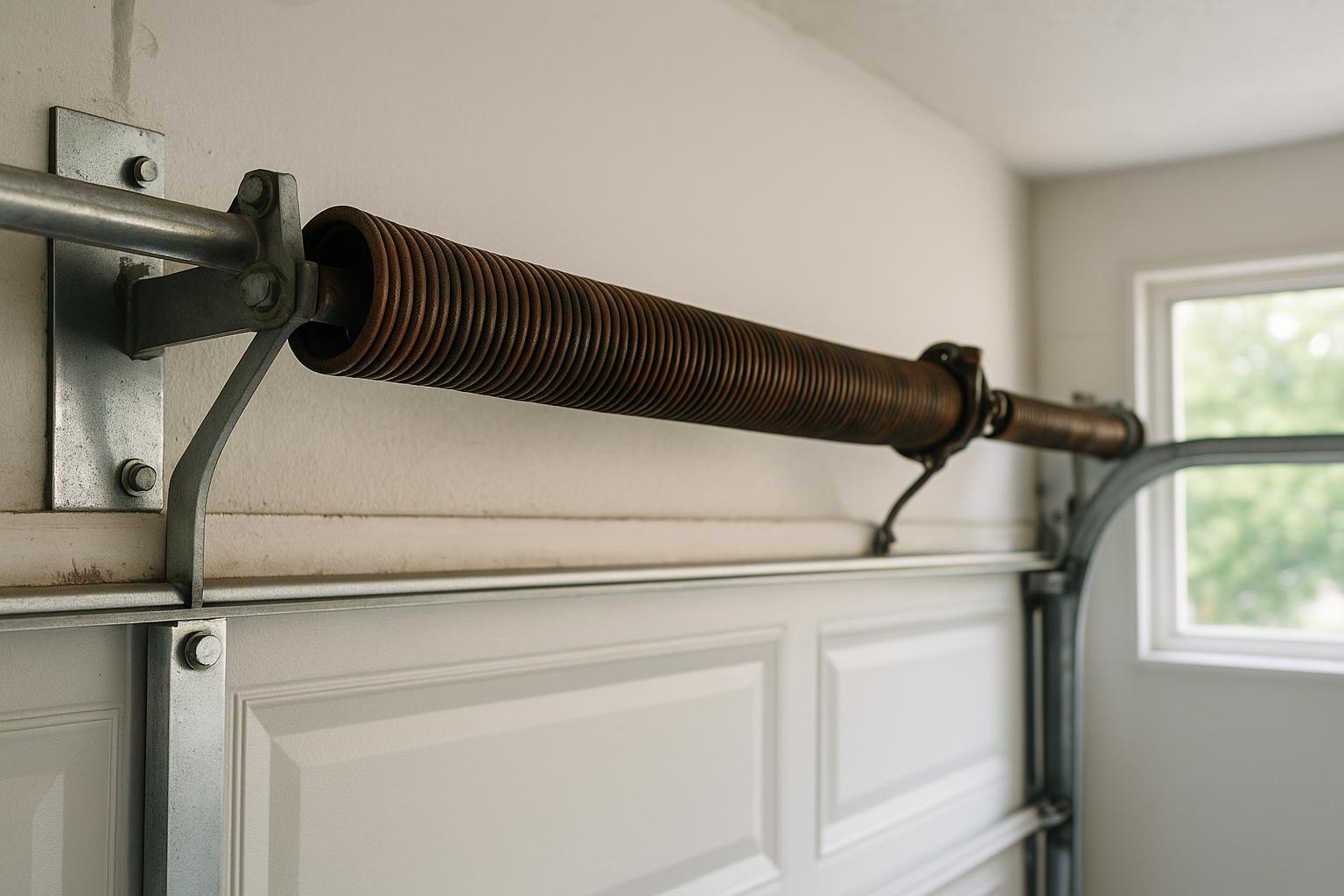
This one requires a visual inspection, which you can do safely from a distance. Look at the torsion spring mounted on the bar above your closed garage door. A healthy spring has tightly wound, evenly spaced coils.
If you notice:
- A visible gap or separation in the coils (this means the spring has already snapped)
- Coils that appear stretched out or unevenly spaced
- Rust or corrosion on the spring surface
Any of these are clear indicators that the spring needs to be replaced. Rust is especially common in coastal areas like Gulf Breeze, Pensacola Beach, and Navarre, where the salty, humid air corrodes metal components faster than in inland areas. Regular lubrication with a silicone-based spray can slow corrosion, but it won't stop it entirely.
5. Your Garage Door Opener Is Struggling
Your garage door opener is designed to move the door along its tracks — not to lift the full weight of the door. That's the springs' job. When the springs weaken, the opener has to work much harder to compensate.
Signs that your opener is straining because of bad springs include:
- The opener runs but the door barely moves or moves very slowly
- The motor sounds louder or more strained than usual
- The opener stops mid-cycle or reverses direction
- The opener overheats or trips its internal safety mechanism
Continuing to use a struggling opener with bad springs can burn out the motor entirely, leaving you with two repairs instead of one. If your opener is acting up, it's worth having a technician check the springs before assuming the opener itself is the problem.
Why You Should Never Replace Garage Door Springs Yourself
We understand the DIY spirit — it's strong here in Gulf Breeze and across the Pensacola area. But garage door spring replacement is one job that should always be left to trained professionals. Here's why:
- Extreme tension: Torsion springs store a tremendous amount of energy. An improperly handled spring can release that energy violently, causing severe injuries or even death.
- Specialized tools required: Proper spring replacement requires winding bars, clamps, and other tools that most homeowners don't have.
- Precise calibration: Springs must be wound to the exact right tension for your specific door weight and size. Too much or too little tension creates a dangerous and poorly functioning door.
A professional technician can typically complete a spring replacement in under an hour, and the cost is far less than an emergency room visit.
How Often Should You Have Your Springs Inspected?
We recommend having your garage door springs and overall system inspected at least once a year. For homeowners in Gulf Breeze and the surrounding coastal communities — including Pensacola Beach, Navarre, and Pace — twice-yearly inspections are even better, given the toll that salt air and humidity take on metal components.
During a maintenance visit, a technician will:
- Inspect springs for wear, rust, and proper tension
- Lubricate springs, hinges, rollers, and tracks
- Test the door's balance
- Check cables for fraying
- Verify that safety features are working correctly
Regular maintenance extends the life of your springs and helps you catch small problems before they become big ones.
Don't Wait for a Spring to Snap
A broken garage door spring always seems to happen at the worst possible time — when you're rushing to work, loading up for a beach day, or coming home late at night. If you've noticed any of the warning signs above, the smartest move is to address the issue now, on your schedule, rather than dealing with an emergency later.
At Gulf Breeze Garage Door, we provide fast, honest spring replacement and garage door maintenance for homeowners across Gulf Breeze, Milton, Pensacola, and the entire surrounding area. We'll diagnose the problem, explain your options, and get your door running safely and smoothly — no surprises, no upsells.
Give us a call today to schedule an inspection or spring replacement before a small problem turns into a big headache.