
The Hidden Cost of Coastal Living on Your Garage Door
Gulf Breeze is one of the most beautiful places to call home. The waterfront views, the sea breeze, the laid-back coastal lifestyle — it's hard to beat. But living between the Pensacola Bay and the Gulf of Mexico means your home is constantly exposed to salt-laden air, and your garage door takes the brunt of it.
Most homeowners don't think about their garage door until something goes wrong. But in a coastal environment like ours, salt air corrosion can quietly eat away at your garage door's hardware, panels, and mechanical components long before you notice a problem. Understanding how salt air affects your garage door — and what you can do about it — can save you hundreds or even thousands of dollars in premature repairs and replacements.
What Salt Air Does to Garage Door Components
Salt air doesn't just affect the surface of your garage door. It works its way into every metal component, accelerating rust and corrosion at a rate that homeowners further inland rarely experience. Here's what's at risk:
Springs and Hardware
Your garage door's torsion or extension springs are made of steel, and steel is highly susceptible to corrosion. Salt air weakens springs over time, making them more brittle and prone to snapping. The same goes for hinges, rollers, brackets, and tracks. When these components corrode, the door becomes harder to open, noisier, and potentially dangerous.
Garage Door Panels
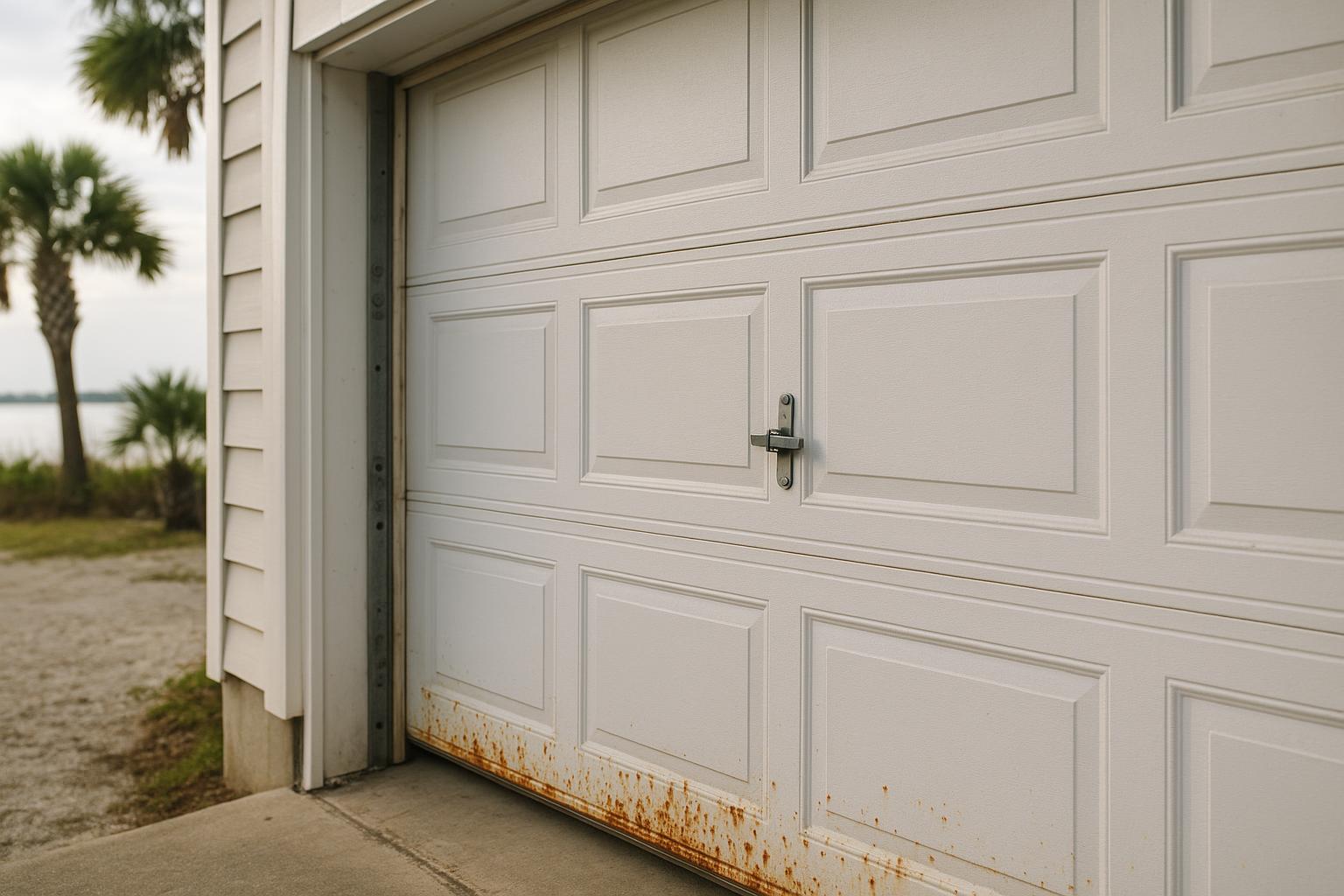
If you have a steel garage door — which is the most common type — the panels themselves can develop rust spots, especially along the bottom edge where moisture tends to collect. Even aluminum doors, while more resistant to rust, can develop pitting and oxidation from prolonged salt exposure.
Garage Door Openers and Chains
The chain or belt drive on your garage door opener isn't immune either. Chain drives are especially vulnerable to rust in coastal areas. Over time, a corroded chain can stretch, skip, or break entirely, leaving your door stuck open or closed at the worst possible time.
Weatherstripping and Seals
While salt air primarily attacks metal, the rubber and vinyl seals around your garage door also degrade faster in coastal environments. UV exposure combined with salt causes weatherstripping to crack and harden, allowing moisture, sand, and pests into your garage.
Signs of Salt Air Damage to Watch For
Catching corrosion early is the key to avoiding expensive repairs. Here are the warning signs Gulf Breeze homeowners should look for:
- Visible rust or orange discoloration on springs, tracks, hinges, or door panels
- Squeaking, grinding, or scraping sounds when the door opens or closes
- The door feels heavier or struggles to open, which may indicate weakened springs
- Flaking or bubbling paint on steel door panels
- A sticky or sluggish opener that used to work smoothly
- Cracked or brittle weatherstripping along the bottom or sides of the door
If you notice any of these signs, it's worth having a professional take a look before a minor issue turns into a major repair.
How to Protect Your Garage Door from Salt Air
The good news is that with some proactive care, you can significantly extend the life of your garage door — even in a coastal environment. Here's what we recommend to our customers in Gulf Breeze and the surrounding areas like Pensacola Beach and Navarre:
1. Schedule Regular Maintenance
An annual or semi-annual garage door maintenance visit is the single best thing you can do for your door's longevity. During a maintenance appointment, a technician will lubricate all moving parts with a corrosion-resistant lubricant, inspect springs and hardware for early signs of rust, tighten loose components, and test the door's balance and safety features.
2. Rinse Your Door Regularly
It sounds simple, but rinsing your garage door with fresh water every few weeks can wash away salt deposits before they cause damage. Pay special attention to the bottom panels, tracks, and any exposed hardware. A garden hose is all you need — no pressure washer required.
3. Apply a Protective Coating
For steel doors, keeping the paint in good condition is your first line of defense against rust. Touch up any chips or scratches promptly with a rust-inhibiting primer and exterior paint. For hardware and springs, a light coating of silicone-based lubricant creates a barrier against moisture and salt.
4. Choose Corrosion-Resistant Materials
If you're in the market for a new garage door, consider materials that hold up better in coastal conditions. Fiberglass and composite doors resist rust entirely, while aluminum doors offer better corrosion resistance than steel. If you prefer the look and durability of steel, opt for a door with a baked-on polyester finish or a vinyl-coated surface designed for coastal use.
5. Upgrade to a Belt-Drive Opener
If you're still using a chain-drive garage door opener, consider upgrading to a belt drive. Belt-drive openers use a reinforced rubber belt instead of a metal chain, eliminating one more component that can rust. They're also significantly quieter — a nice bonus for homes with bedrooms above or adjacent to the garage.
6. Replace Weatherstripping Before It Fails
Don't wait for your weatherstripping to completely deteriorate. Replacing it proactively keeps moisture and salt air out of your garage, protecting not just the door but everything you store inside. We recommend checking your seals at least once a year and replacing them at the first sign of cracking or hardening.
When to Call a Professional
Some garage door maintenance tasks are safe for homeowners to handle, like rinsing the door or visually inspecting for rust. But anything involving springs, cables, or the opener mechanism should be left to a trained technician. Garage door springs are under extreme tension and can cause serious injury if handled improperly.
If your springs are showing signs of corrosion, your door is off-balance, or your opener is struggling, don't try to fix it yourself. A professional spring replacement or opener repair done correctly will keep your family safe and your door functioning reliably.
Living on the Coast Doesn't Have to Mean Constant Repairs
We love living and working in Gulf Breeze, and we understand the unique challenges that come with maintaining a home in a coastal environment. Salt air corrosion is a reality here, but it doesn't have to shorten the life of your garage door. With regular maintenance, smart material choices, and prompt attention to early warning signs, your garage door can perform beautifully for years to come.
If it's been a while since your garage door had a professional checkup — or if you're already seeing signs of salt air damage — give us a call. At Gulf Breeze Garage Door, we're here to help homeowners across Gulf Breeze, Pensacola, Milton, Pace, and the surrounding communities keep their garage doors in top shape, no matter what the coastal weather throws at them.