
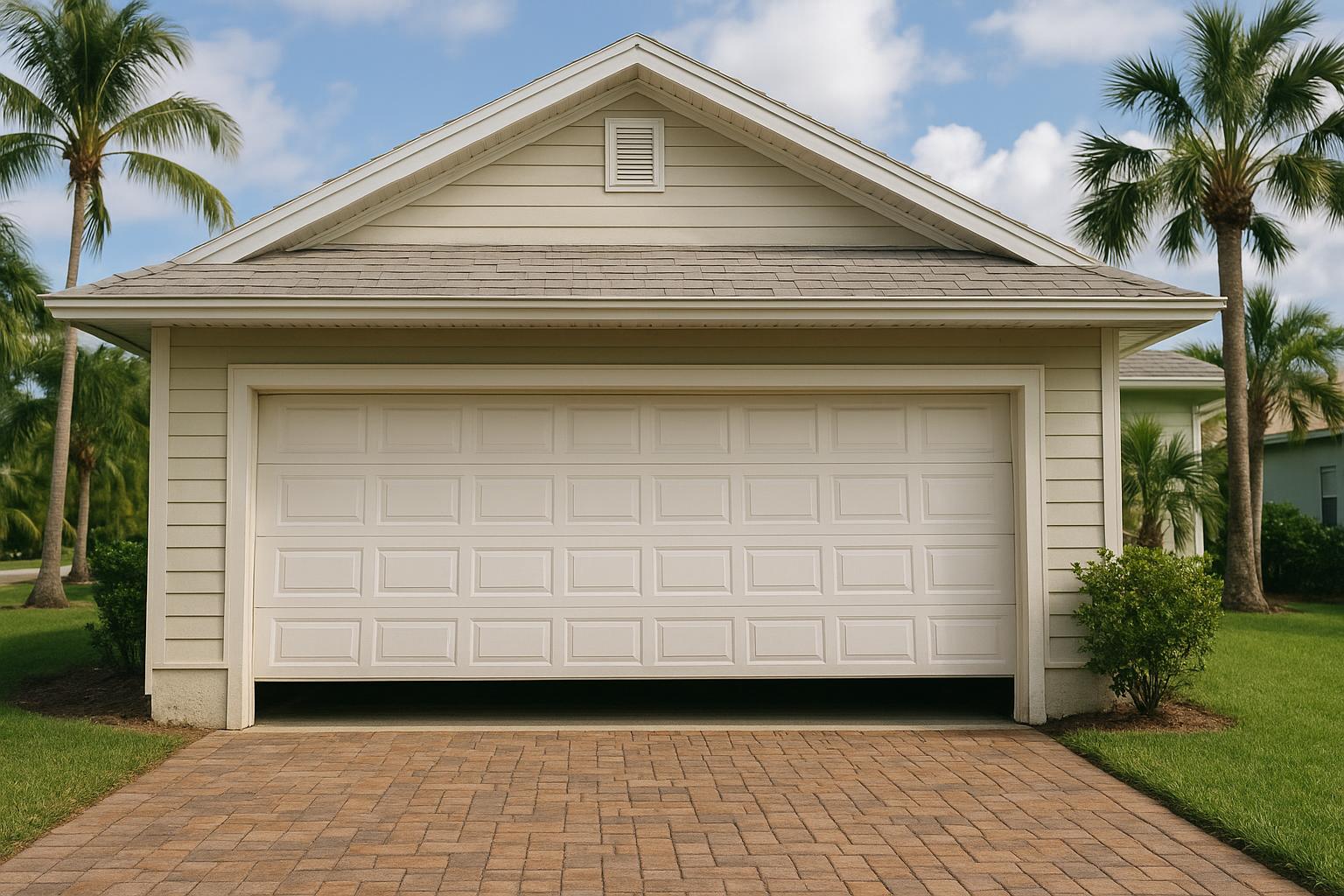
A Garage Door That Won't Close Is More Than an Inconvenience
You press the button on your garage door remote, the motor hums, and... nothing. Or maybe the door starts to close and then reverses right back up. Few household problems are as immediately stressful as a garage door that refuses to shut. Your vehicles, tools, and belongings are exposed, and if it happens at night, your home's security is compromised.
For homeowners in Gulf Breeze, this is a problem that can't wait. Between summer storms rolling in off the Gulf and the general need to keep your home secure, getting your garage door back on track quickly matters. The good news is that many of the most common causes are straightforward to diagnose — and some you can even fix yourself before calling in a professional.
1. Something Is Blocking the Safety Sensors
Every modern garage door has a pair of photoelectric safety sensors mounted near the bottom of the door tracks, one on each side. These sensors shoot an invisible beam of infrared light between them. If anything breaks that beam — a trash can, a bike tire, a garden hose, even a cobweb — the door will refuse to close or will reverse immediately after starting to descend.
What to Do
- Check for any objects in the path between the two sensors and clear them away.
- Wipe the sensor lenses with a soft, dry cloth. Dust, dirt, and moisture can interfere with the beam.
- Make sure both sensors are properly aligned. Each sensor typically has a small LED light — if one is blinking instead of glowing steadily, it's likely misaligned. Gently adjust it until the light holds steady.
In Gulf Breeze, humidity and coastal condensation can fog up sensor lenses more frequently than in drier climates, so this is worth checking regularly.
2. The Remote or Wall Switch Has a Problem
Before assuming the worst, rule out the simple stuff. If your remote control isn't working, try the wall-mounted switch inside the garage. If the wall switch works but the remote doesn't, you may just need fresh batteries in the remote or to reprogram it.
What to Do
- Replace the batteries in your remote control.
- If multiple remotes aren't working, try reprogramming them according to your opener's manual.
- Check that the wall switch wiring hasn't come loose. If pressing the wall button does nothing at all — no motor sound, no lights — the issue may be with power to the opener unit itself.
3. The Close-Limit Switch Needs Adjusting
Your garage door opener has limit switches that tell the motor how far the door should travel when opening and closing. If the close-limit switch is set incorrectly, the opener may think the door has hit the ground (or an obstruction) before it actually has, causing it to stop short or reverse.
What to Do
The limit adjustment is usually a pair of small screws or dials on the side of the opener unit. Consult your owner's manual for the exact location and adjustment procedure. Small, incremental adjustments are key — turning the screw too far can cause the door to slam into the ground with excessive force, which creates a different set of problems.
If you're not comfortable making this adjustment yourself, this is a quick fix for a trained technician.
4. The Tracks Are Misaligned or Obstructed
Garage door tracks guide the door's rollers as it moves up and down. Over time, tracks can shift, develop bends, or accumulate debris. When this happens, the door may bind, get stuck partway, or refuse to close altogether.
What to Do
- Visually inspect both tracks for obvious bends, dents, or gaps where the track meets the frame.
- Look for debris — leaves, small rocks, or hardened grime — that could be blocking the rollers.
- Check that the mounting brackets holding the tracks to the wall are tight and haven't loosened over time.
If a track is significantly bent or misaligned, it's best to have a professional handle the repair. Forcing a door along a damaged track can cause further damage to the rollers, cables, and even the door panels themselves.
5. Broken Cables or Worn-Out Rollers
The cables on either side of your garage door work in tandem with the springs to control the door's movement. If a cable snaps or slips off its drum, the door may close unevenly, jam, or refuse to move. Similarly, worn or broken rollers can cause the door to seize up in the tracks.
These are repairs that should always be handled by a professional. Garage door cables are under significant tension, and attempting a DIY fix can result in serious injury.
6. The Opener's Logic Board Has Failed
If you've checked everything else and the door still won't cooperate, the problem may be internal to the opener itself. The logic board — essentially the brain of your garage door opener — can fail due to power surges, age, or electrical issues. Gulf Breeze homeowners know that summer thunderstorms are a regular occurrence, and a single power surge can fry an unprotected opener circuit board.
What to Do
- Consider plugging your garage door opener into a surge protector to prevent future damage.
- If you suspect a logic board failure, a garage door technician can test the board and replace it if needed. In some cases, replacing the entire opener is more cost-effective than replacing the board alone, especially if the unit is older.
7. The Door Itself Is Damaged
Sometimes the issue isn't mechanical at all — it's structural. A garage door panel that's been dented by a car bumper, warped by heat and humidity, or damaged during a storm can prevent the door from sitting properly in its tracks. Warped or bent panels create friction and resistance that the opener may not be able to overcome.
In this case, a professional can assess whether the damaged panel can be replaced individually or whether a full door replacement makes more sense.
When to Call a Professional in Gulf Breeze
Some of the fixes above — clearing sensor obstructions, replacing remote batteries, cleaning the tracks — are perfectly safe for any homeowner to handle. But anything involving springs, cables, track realignment, or electrical components should be left to an experienced technician. These systems are under high tension and carry real risk of injury if handled improperly.
At Gulf Breeze Garage Door, we see these issues every week across Gulf Breeze, Pensacola, Navarre, and the surrounding communities. Most of the time, we can diagnose and fix the problem in a single visit. And if your door needs more extensive repair or replacement, we'll give you an honest assessment so you can make the best decision for your home.
Don't Let a Stuck Door Compromise Your Home
A garage door that won't close is a security concern, a weather vulnerability, and a daily frustration all rolled into one. The sooner you identify the cause, the sooner you can get it resolved — often more affordably than you'd expect. If you've run through the basic troubleshooting steps and your door still won't budge, give us a call. We're local, we're responsive, and we'll get your garage door working the way it should.